




24-hour customer service hotline:
0086+400-800-8605
+86176-1673-8512
Reservation:
+86-0536-7519229
Energy conservation is a long-term strategic policy for China's economic development and also a basic national policy. Sewage treatment plant is an energy intensive and high-energy consumption industry, ranking among the top ten in the high energy consumption industry. What is the significance of energy conservation and consumption reduction of sewage treatment plants in the context of the national requirement to strengthen energy conservation and emission reduction, achieve low-carbon development and accelerate the construction of ecological civilization? What should the sewage treatment plant do to save energy and reduce consumption? With such questions, E20 Research Institute interviewed Professor Wang Hongchen, director of low carbon water environment technology research center of Renmin University of China and vice president of School of environment of Renmin University of China.
The sewage treatment plant has a large space for energy saving and consumption reduction
At present, the energy consumption of sewage treatment plants in China is mainly power consumption. The power consumption per ton of sewage treatment is about 0.2-0.3 kwh, and the power cost accounts for about 50% - 70% of the sewage treatment cost. On the basis of the construction of sewage treatment plants in China, there is a very large space for improving the effluent quality and reducing the energy and material consumption through the optimized operation of existing facilities. Wang Hongchen said: "the space for energy saving and consumption reduction through the transformation of the sewage treatment plant, that is, the potential of efficiency improvement and transformation, depends on the specific process, technology and equipment. For the existing typical sewage treatment plant, it is possible to reduce its energy consumption by more than 30% through comprehensive efficiency improvement and operation optimization."
Energy saving and consumption reduction are of great significance
Wang Hongchen said: "don't underestimate the 30% reduction in energy consumption of sewage treatment. This is actually a big account for all parties."
First of all, energy conservation and consumption reduction are related to the efficiency of social resources. By the end of September 2015, China had established 3830 urban sewage treatment plants with a sewage treatment capacity of 162 million cubic meters per day. According to the annual treatment of 45 billion tons of sewage by sewage treatment plants in China, if the energy consumption can be saved by 30%, it can save about 4 billion kwh of social resources for the country. Under the background that the state strongly advocates energy conservation and consumption reduction, the energy conservation and consumption reduction of sewage treatment plants should be paid enough attention.
Secondly, energy saving and consumption reduction are related to the survival and development of enterprises. Judging from the current environment of the sewage treatment plants in China, whether in terms of * * or the management of the sewage treatment plants and the relationship with the government, the differences between enterprises are becoming smaller and smaller. With the industry rules becoming more and more clear and competition becoming more and more abundant, technology will become the Z fundamental factor of enterprise competition. If the enterprise reduces the power consumption by 30% through technical means, it will reduce the sewage treatment cost by 18%. Undoubtedly, this will greatly improve the competitiveness of enterprises.
Third, energy conservation and consumption reduction are related to climate change. On December 12, 2015, negotiators from 196 countries in the world adopted the historic Paris Agreement in Paris, France. The agreement stated that all parties would strengthen global response to the threat of climate change, set the target of controlling the global temperature rise within 2 ° C, and strive to control the temperature rise within 1.5 ° C. At present, China is in the industrialization stage, which determines that it faces a more difficult task than developed countries in promoting energy transformation and achieving carbon emission reduction. It is understood that 2% - 5% of global greenhouse gas emissions (especially methane and nitrogen oxides with more serious impact) are related to the sewage system. Therefore, if the sewage treatment plant can achieve carbon emission balance, it will make a significant contribution to global greenhouse gas emission reduction. Wang Hongchen said: "the sewage treatment industry belongs to the top ten carbon emission industries, but compared with the transportation, energy and construction industries, the input-output of the sewage treatment industry is greater and the efficiency is higher. That is to say, for the same carbon emission reduction, the emission reduction cost paid by the sewage treatment industry is Z low."
Research on energy saving and consumption reduction methods of sewage treatment plant
Energy saving and consumption reduction are related to the use efficiency of social resources, the survival of enterprises and climate change. So, how can the sewage treatment plant achieve energy saving and consumption reduction? Wang Hongchen briefly introduced the three aspects of energy conservation and consumption reduction of the sewage treatment plant:
(1) Carry out energy consumption audit: strengthen the energy consumption analysis of each link and the whole process of sewage treatment, dynamically evaluate the energy consumption of each sewage treatment plant by establishing the industrial energy consumption benchmark, and determine the energy saving and consumption reduction potential;
(2) Realize optimized operation: through operation optimization, each treatment unit is in * * operation state to avoid inefficient lifting, excessive mixing and excessive aeration;
(3) Implement efficiency improvement Transformation: adopt * * equipment and sustainable new technology to transform existing facilities and equipment, so as to achieve energy saving and consumption reduction in essence.
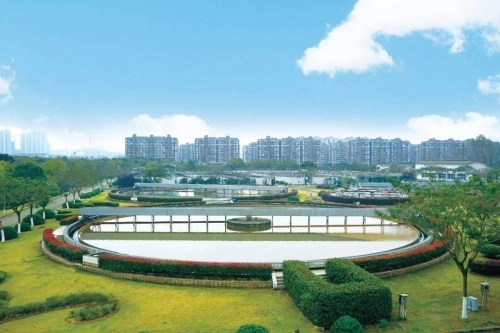

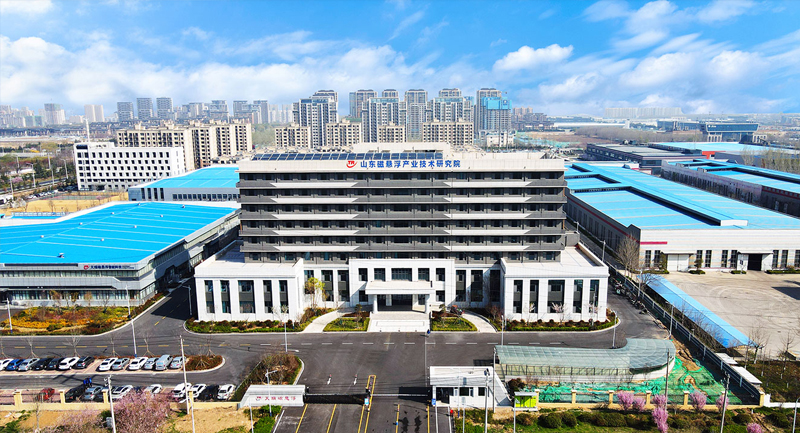


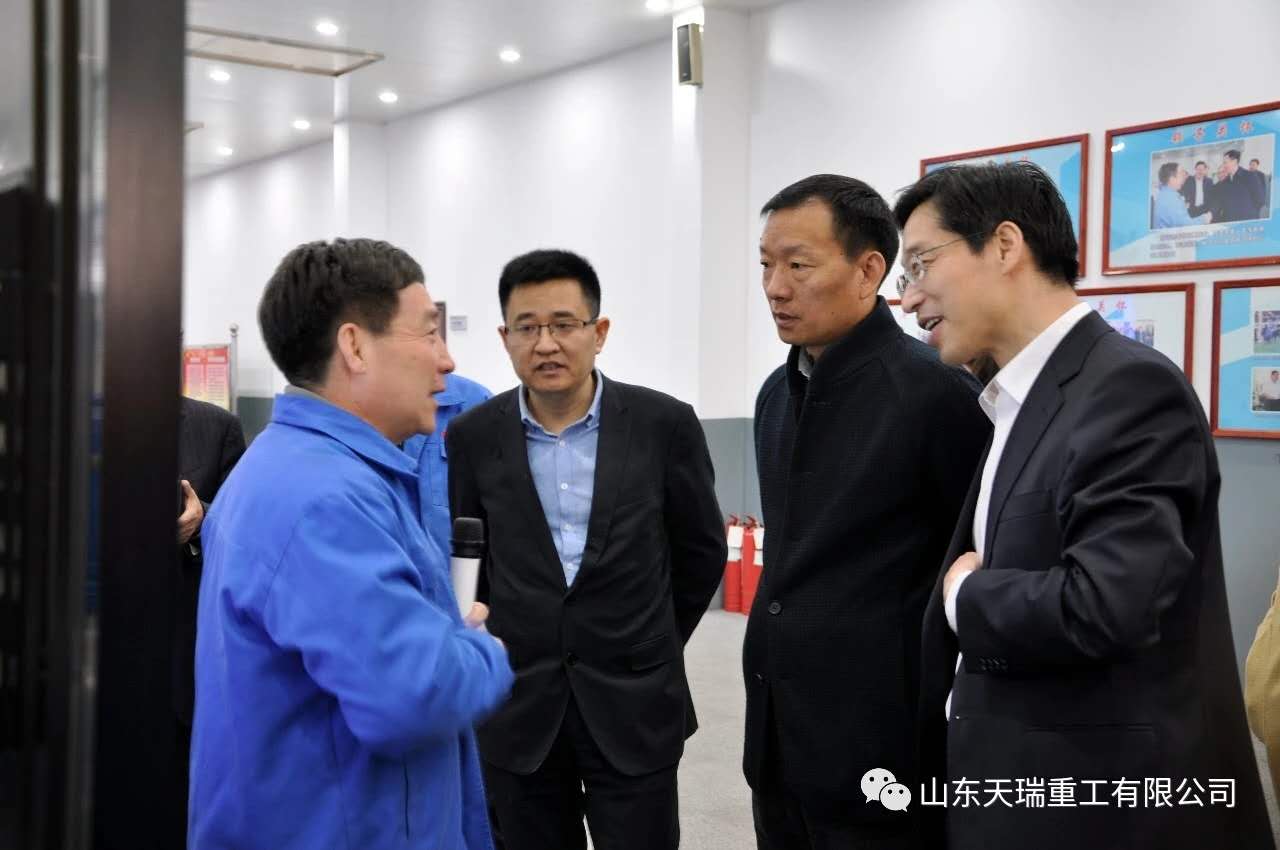 Visit Tianrui heavy industry to investigate Shandong Tianrui Heavy Industry Co., Ltd
 重磅发布!天瑞重工获山东省专利一等奖,董事长李永胜外籍院士获山东优秀发明家奖
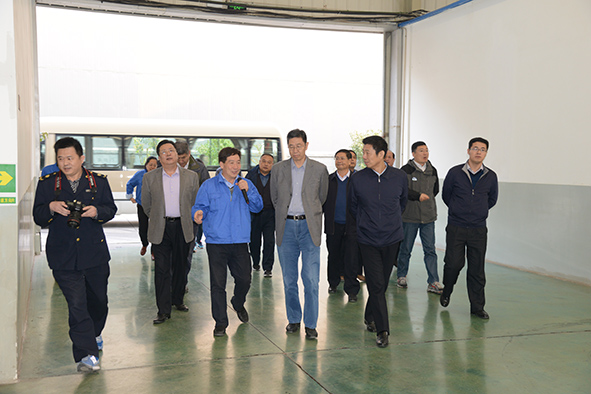 山东省质量强省及名牌战略推进工作领导小组莅临天瑞重工实地核查质量工作开展情况