




24-hour customer service hotline:
0086+400-800-8605
+86176-1673-8512
Reservation:
+86-0536-7519229
This paper mainly describes the maintenance and operation of the rock drill, the problems that should be paid attention to, the common faults of the rock drill and their treatment methods, the disassembly and assembly of the rock drill and other technical problems.
1. Problems needing attention in maintenance of rock drill
(1) Before using the new machine, disassemble and clean the internal parts to remove the rust preventive oil. During reassembly, all mating surfaces shall be coated with lubricating oil. The dirt in the air supply pipe and the joint shall be purged with air to prevent it from entering the machine and wearing the parts.
(2) Check whether the shape and length of the drill tail, the size and depth of the water pinhole meet the requirements; Whether the central hole is unblocked. In case of "stacking" or cracking of the drill tail, replace it in time according to the situation.
(3) Supply air or water to the water needle of the rock drill and observe whether it is unblocked. Dry drilling is not allowed, and the water needle is not allowed to be removed to avoid damaging the valve sleeve.
(4) Frequently and carefully check whether the joints are fastened, whether the air inlet elbow is firmly clamped, and whether the operating handles are reliable and flexible, so as to prevent the loose parts from injuring people or affecting the normal operation of machines and tools.
(5) Before the operation of the rock drill, the oil injector shall be filled with lubricating oil and the oil quantity shall be adjusted. During operation, fill the oil injector with oil once every 1H, and do not operate without lubricating oil. For the floor type oil injector, attention must be paid to whether its installation direction is correct.
(6) After the drilling is completed, the water pipe shall be removed first, and the machine shall be operated lightly to blow out the remaining water droplets in the machine to avoid corrosion of internal parts; Then put the rock drill and air leg in a safe and clean place to prevent damage during blasting.
(7) Special personnel shall be assigned to take charge of maintenance. After work, carefully check whether all parts are damaged. In case of failure, repair them in time.
(8) When dealing with faults or overhauling rock drills in the underground, it is not allowed to do so in the heading face, but in the underground repair department with better conditions.
(9) When used machines and tools need to be stored for a long time, they shall be disassembled, cleaned, oiled and sealed.
2. Problems needing attention in operation of rock drill
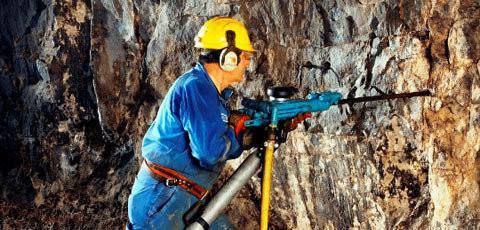
(1) Before ventilation, turn the handle of the pressure regulating valve to the "O" position to prevent sudden extension of the air leg during ventilation and accidents.
(2) When drilling with a rock drill, it is necessary to conduct test run first, and run for about 10min under low pressure (0.3MPa) or half start-up, and check whether the operation is abnormal.
(3) When drilling, use small wind to drive the rock drill, and gradually drive the whole vehicle to drill while the air leg jacking force gradually increases. Do not push too hard or too fast to prevent eye deviation. It is not allowed to start the whole vehicle suddenly when the air leg thrust Z is large, so as to avoid breaking the drill rod and injuring people. After the hole position is properly opened, the drill bit is positioned and begins to drill into the rock, the normal rock drilling can be carried out according to different lithology and with the impact force, torque and propulsion force of Z.
(4) The pressure of air supply and water supply shall be within the specified range. If the pressure is too high, the wear of parts will be accelerated or the phenomenon of "hammer washing" will occur; If the pressure is too low, the drilling efficiency will be reduced, the cleaning effect of the hole will be poor, and even the normal drilling will not be possible.
(5) It is not allowed to drive the whole vehicle for a long time, especially to "hit" violently Prevent cylinder temperature from being too high and parts from being scratched or damaged.
(6) In case of jamming due to cracks, karst caves or other reasons, reduce the impact force, increase the rotation speed, or even stop the impact, and completely rely on the rotation and strong blowing to avoid the jamming failure. Do not continue drilling until the fault is eliminated
(7) When the air supply of the impact part cannot be started, close the control valve installed on the equipment, and restart after the residual air in the air duct is exhausted.
(8) When pulling out the drill, it is appropriate to drive half a car to pull out the drill. When the drill head is about to exit the eye hole, the rotation and pulling speed shall be controlled to prevent the drill rod from swinging too much.
(9) After the drilling is completed, the unit shall be evacuated to the safe area and placed properly to avoid damaging the equipment during blasting.
3. Common faults of rock drill and their treatment
Common faults and treatment methods of yt-23 rock drill are as follows:
Fault 1: rock drilling speed decreases
(1) Fault causes: first, the working air pressure is low; Second, the air legs are not flexible, the thrust is insufficient, and the fuselage jumps back; Third, the lubricating oil is insufficient; Fourth, the water for purging flows into the lubricating parts; Fifthly, the silencing cover is frozen, affecting the exhaust; Sixth, the wear of main parts exceeds the limit; Seventh, the phenomenon of "hammer washing" occurred.
(2) Troubleshooting measures: first, adjust the pipeline to eliminate air leakage, increase the diameter of the air supply pipe and reduce the gas consumption equipment; Second, adjust the installation angle of the air leg, check whether the sealing rings of each part of the air leg are intact, and whether the handle, trigger and reversing valve are missing, damaged or stuck; Third, add oil to the oil injector, replace the contaminated lubricating oil, clean or blow through the small holes of the oil path; Fourth, replace the broken water needle, replace the drill rod blocking the central hole, reduce the water pressure, and test the water injection system; Fifth, knock off the frozen ice; Sixthly, replace the worn parts in time; Seventh, reduce the water pressure and overhaul the water injection system.
Fault 2: broken water needle
(1) Fault causes: first, the small end of the piston is seriously stacked or the center hole of the drill tail is not correct; Second, the clearance between the drill tail and the hexagonal sleeve is too large; Third, the water needle is too long; Fourth, the reaming depth of drill tail is too shallow.
(2) Troubleshooting measures: first, timely replacement; Second, the hexagonal sleeve should be replaced when the opposite side size is worn to 25mm; Third, trim the length of the water needle; Fourth, it is deepened according to regulations.
Fault 3: failure of air water linkage mechanism
(1) Fault causes: first, the water pressure is too high; Second, the air path or water path is blocked; Third, the parts in the water injection valve body are rusted; Fourth, fatigue failure of water injection valve spring; Fifth, the sealing ring is damaged.
(2) Elimination measures: first, properly reduce the water pressure; Second, timely dredge the air or water routes; Third, clear the rust or replace it; Fourth, replace the spring; Fifth, replace the sealing ring.
Fault 4: not easy to start
(1) Fault causes: first, the water needle was removed; Second, the lubricating oil is too thick and too much; Third, water is poured into the machine.
(2) Elimination measures: first, refill the water needle; Second, proper adjustment; Third, find out the reasons and clear them in time.
Fault 4: broken solder
(1) Fault causes: first, the pipeline pressure is too high; The second is a sudden drive.
(2) Elimination measures: first, take pressure reduction measures; Second, start the rock drill slowly.
4. Disassembly and assembly of rock drill
4.1 problems needing attention in disassembly and assembly
(1) Wear protective glasses to avoid eye injury caused by broken pieces;
(2) Pay attention to safety to avoid sudden falling off of parts and hitting feet;
(3) The place where the rock drill is disassembled shall be clean and free of sundries;
(4) The force shall be light and balanced. It is not allowed to disassemble or damage the parts by force;
(5) Pay attention to the assembly position of the original parts to facilitate assembly after maintenance;
(6) Do not use the piston as a hammer.
(7) The removed parts shall be properly stored without loss or damage. All parts shall be cleaned before assembly. If they are cleaned with kerosene or gasoline, fireworks must be prohibited around them to ensure safety
(8) All parts shall be subject to verification inspection, qualified parts shall be installed, and unqualified parts shall be repaired or replaced; All friction surfaces shall be coated with lubricating grease before assembly, and the valve core of the valve mechanism shall move freely.
(9) The two long bolts shall be fastened uniformly, and the pre tightening force shall meet the requirements.
4.2 disassembly sequence of yt-23 rock drill
(1) First, remove the air leg, muffler cover, air pipe, water pipe, drill rod and other auxiliary components.
(2) Remove the oil injector; Remove the handle nut and take out the water needle and the water needle jacket;
(3) Remove 2 tension bolts; Remove the handle.
(4) Separate the machine head from the guide sleeve, and take out the rotating sleeve and drill sleeve from the machine head.
(5) Separate the guide sleeve and cylinder block and take out the piston; Separate the cylinder body and the handle body, and remove the screw rod; Remove the valve from the cylinder block.
(6) Remove the ratchet wheel and three valves (control valve, pressure regulating valve and reversing valve) from the handle.
4.3 assembly sequence of yt-23 rock drill
(1) Install the rotating sleeve and drill sleeve into the machine head.
(2) Put the guide sleeve into the front end of the cylinder; Install the piston into the cylinder.
(3) Assemble the valve train; Install the valve mechanism into the rear chamber of the cylinder and position it with a pin
(4) Assemble the rotary drill mechanism; Install the three valves into the handle body.
(5) Lock the machine head, cylinder body, handle and handle with two tension bolts.
(6) Assemble air water linkage device; Assemble the footage elbow and oil injector.
(7) Assemble auxiliary parts such as muffler cover, water pipe and air pipe; Assemble the air leg.




 Visit Tianrui heavy industry to investigate Shandong Tianrui Heavy Industry Co., Ltd
 重磅发布!天瑞重工获山东省专利一等奖,董事长李永胜外籍院士获山东优秀发明家奖
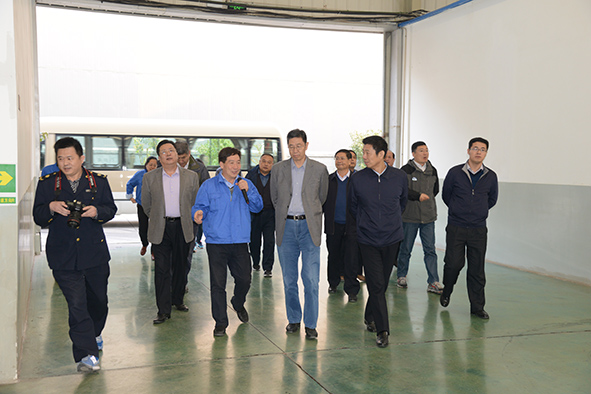 山东省质量强省及名牌战略推进工作领导小组莅临天瑞重工实地核查质量工作开展情况