




24-hour customer service hotline:
0086+400-800-8605
+86176-1673-8512
Reservation:
+86-0536-7519229
1、 The hammer has no strength?
Cause:
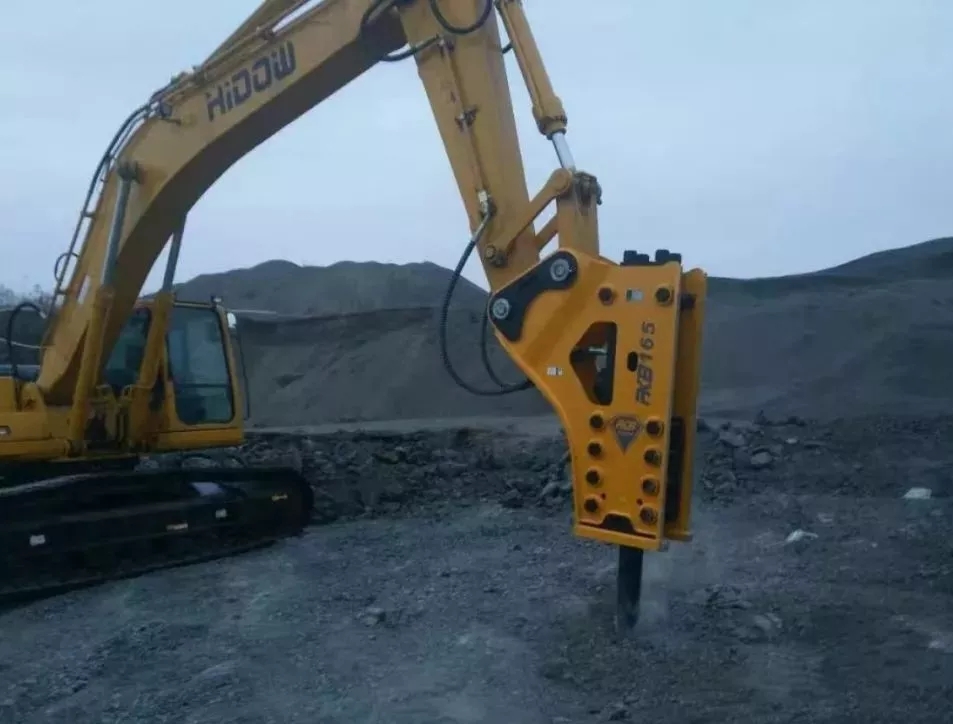
Nonstandard operation. When the crushing hammer is driven in the air, the piston transmits the impact force to the steel drill, and the steel drill transfers the impact force to the steel drill pin. The steel drill pin is easy to break when it bears a strong impact force. When the steel drill pin is impacted, the impact force will be distributed to the cross pin of the steel drill pin before and after. At this time, the cross pin of the steel drill pin will push against the inner hole of the cross pin of the steel drill pin, resulting in the crack of the jumping block at the edge of the inner hole and the fracture of the lower cylinder block.
Frequent empty driving will break the front body, flat pin, bolt, etc., crack the guard plate, boom, steel drill rod, etc., and leak oil from the hose and hard pipe.
processing method
The crushed ore is crushed after being compacted, and the striking angle is 85-95 degrees.
Explain to the customer that the operation shall be standardized according to the operation instructions of the crushing hammer.
2、 The hammer stops striking?
Cause:
There are many reasons for not striking:
For example: stop striking during the operation of the crushing hammer:
1. Reversing valve card. After disassembling and inspecting the crushing hammer, it was found that other parts were in good condition. After inspecting the reversing valve, it was found that its sliding was astringent and it was easy to get stuck. After removing the valve core of the reversing valve, it was found that there were several scratches on the valve body. (replace the valve element of reversing valve)
2. Improper replacement of bushing. After the bushing of the crusher is replaced, the crusher stops working. It does not strike when it is pressed down, but it does strike when it is slightly lifted up. After the bushing is replaced, the piston position is higher, which causes some small reversing valve control oil circuits in the cylinder to be closed at the initial position, and the reversing valve stops working, which causes the crusher to stop working.
3. Rear cover oil inlet. (upper cylinder block) the crushing hammer is gradually weak during the striking process, and the striking is stopped after Z. Measure the nitrogen pressure. The pressure is too high. After being released, it can strike, and it stops striking soon. After measurement, the pressure becomes high again. After disassembly, it was found that the upper cylinder was filled with hydraulic oil, and the piston could not be compressed backward, resulting in the failure of the hammer. (replace seal assembly)
4. The accumulator components in the pipeline fall into the pipeline. During the inspection, it was found that the deformed parts of the reversing valve were stuck to the reversing valve.
In addition to the above reasons, the valve plate of the excavator is stuck, or the O-ring on the valve plate comes out of the groove, which also causes the hammer not to strike.
3、 Can't adjust the impact frequency of the crushing hammer?
Cause:
The frequency regulator of the crusher was inspected. After the frequency regulator was removed, the O-rings were inspected and found to be deformed and damaged, which made it impossible to change the frequency.
Treatment method: replace the regulator O-ring
4、 Does the newly installed crushing hammer not strike?
Cause:
It may be that the pipeline is connected reversely. The pipeline should be high-pressure on one side of the cab and low-pressure on the other side. However, it is actually installed reversely, causing the crusher to not work. It may also be that the valve plate on the multi-way valve of the excavator is stuck.
Incorrect installation of high and low hoses: one side of the cab is high and the other side is low
processing method
1. Install the pipeline correctly.
2. Ensure the normal operation of the valve plate.
5、 The front end of the piston is damaged?
Cause:
During the use of the crushing hammer, metal fragments fall, and the fragments fall after the front cover. After removal, it was found that the striking surface at the front end of the piston was damaged. The steel drill rod used for the breaking hammer was self-made by the user. The hardness is too high. When the hardness is higher than that of the piston, the front end of the piston will wear quickly during operation
Treatment method:
1. Correct the piston head with a grinder, but within a certain limit size.
2. Explain to the customer to purchase genuine parts. (steel drill)
Treatment method:
Generally speaking, it is about 8 mm (the little finger can reach into the lower cylinder). If it is not replaced in time, the following consequences will occur:
1. The gap between the steel drill and the bushing is too large, which will cause dust and foreign matters to enter the cylinder body during the crushing operation. With the reciprocating movement of the steel drill, the sealing components will be worn and damaged, resulting in oil leakage and black oil.
2. Due to the excessive clearance, there will be unilateral stress, which will damage the oil film and cause the piston of the middle cylinder block to be pulled.
3. The plane of the striking end cannot be in contact with each other, and Z will eventually damage the tail of the steel drill rod.
4. When the piston cannot move vertically up and down, the cylinder block will be abraded, causing the cylinder block to be out of roundness quickly. When the out of roundness is too large, internal leakage will occur in the hammer, and the impact force of the hammer will be reduced.
5. Reduce the service life of piston and steel drill rod.




 Visit Tianrui heavy industry to investigate Shandong Tianrui Heavy Industry Co., Ltd
 重磅发布!天瑞重工获山东省专利一等奖,董事长李永胜外籍院士获山东优秀发明家奖
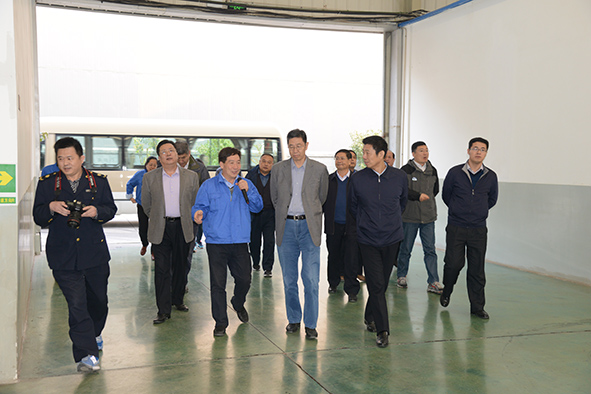 山东省质量强省及名牌战略推进工作领导小组莅临天瑞重工实地核查质量工作开展情况