




24-hour customer service hotline:
0086+400-800-8605
+86176-1673-8512
Reservation:
+86-0536-7519229
In the sewage treatment plant, the energy consumption of air blowing and aeration of sewage treatment equipment accounts for about half of the total energy consumption. Selecting the appropriate aeration fan plays a vital role in saving the working cost. Types of aeration fans there are four types of fans commonly used for oxygen tank aeration: Roots blower, multi-stage centrifugal fan, single-stage high-speed centrifugal fan and magnetic levitation fan.
Now it is mostly three blade type, and each rolling cycle is completed by two sets of three blade impellers for three times of suction and exhaust. Simple structure and stable function. Magnetic levitation blower is a positive displacement fan, which is characterized by that when the resistance of the pipe network is changed, the flow rate is very small in the z-high planning pressure planning. For Roots blower, the pressure change has little impact. When the liquid level of aeration tank is changed, the air volume is basically unchanged. The operation plan is very small. The roots blower does not have a speed control system. The motor power is certain, the rotation speed is certain, and the air volume is constant. It cannot be adjusted according to the working condition. The centrifugal blower is driven by the motor to rotate the fan impeller, so that the gas between the blades is thrown out under the action of centrifugal force, and the external gas is sucked through the negative pressure formed in the middle of the impeller to achieve the purpose of continuous blowing. At the normal speed, the single-stage centrifugal pressure rise is limited, and the multi-stage series connection can meet the pressure rise requirements, which is called multi-stage centrifugal fan. The multi-stage centrifugal fan changes greatly with the change of wind pressure and flow.
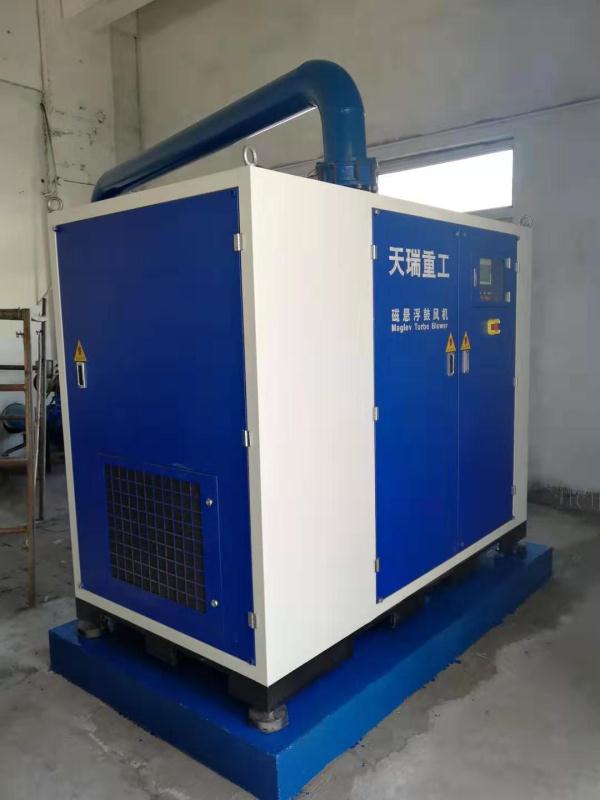
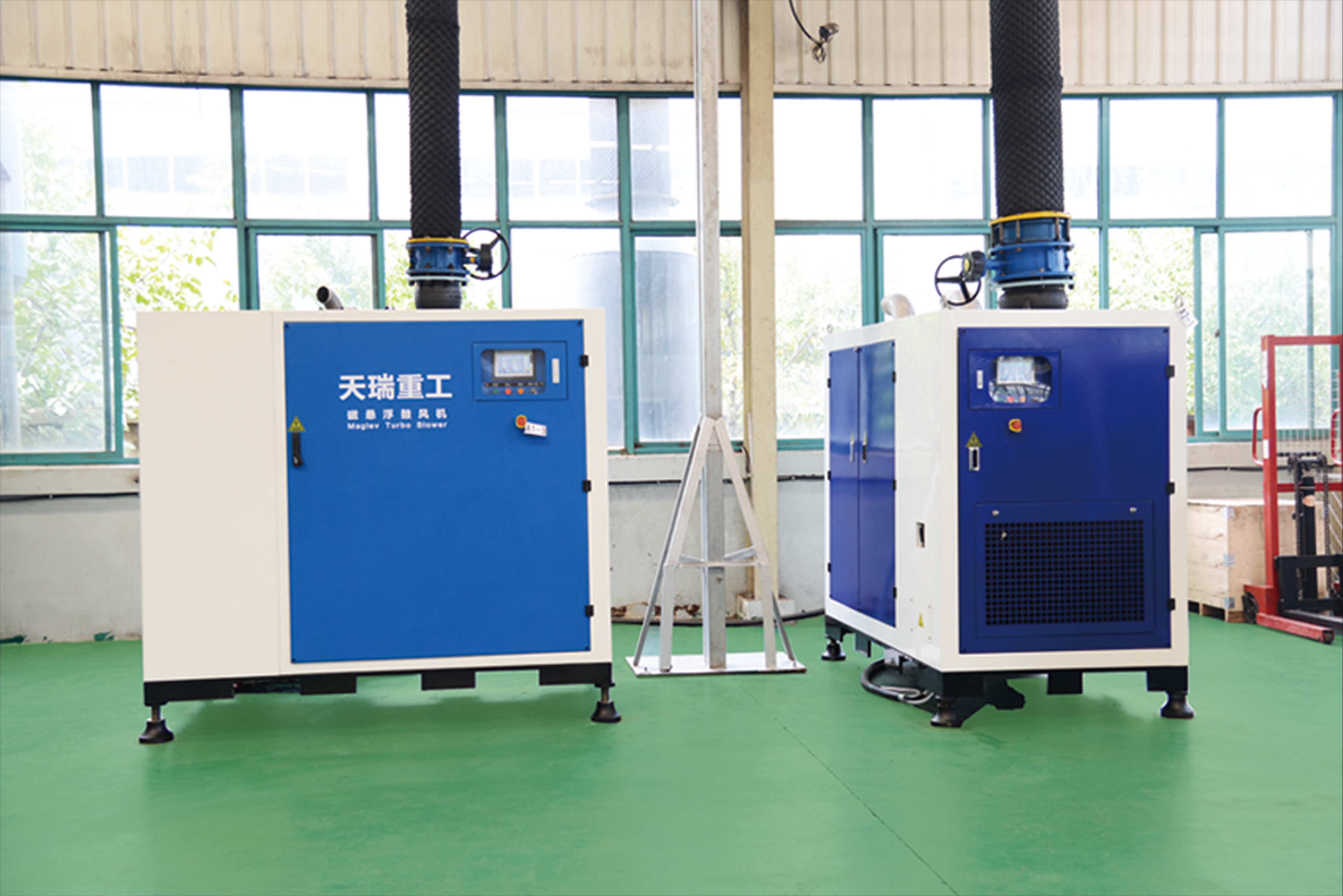
When the liquid level of the aeration tank is changed, the blast volume will be changed. The operation plan is small, and can be properly scheduled after adding frequency converter. The plan is limited and narrow. The single-stage high-speed centrifugal fan refers to the forward fan speed, and the pressure rise requirements of the process can be reached through the single-stage centrifugal. Single stage high-speed centrifugal fan has large air volume and high power. The flow rate of single-stage high-speed centrifugal fan changes greatly with the change of wind pressure. When the liquid level of the aeration tank is changed, the blast volume will be greatly changed. Operation planning: the scheduling is rugged and small. The single-stage high-speed centrifugal fan can be adjusted through the inlet guide vane. The air volume adjustment does not affect the air pressure, and the fan shaft power can be reduced together. Because the air pressure drops greatly during frequency conversion Scheduling, and the process requirements may not be satisfied, the single-stage high-speed centrifugal fan generally does not need frequency conversion Scheduling air volume. Magnetic levitation blower magnetic levitation blower, through the action of electromagnetic force, makes the rolling shaft form a suspension condition, completely without contact, conflict and lubrication; The high-speed motor directly drives the three-dimensional flow impeller, saves the gearbox, completely eliminates the loss of mechanical transmission, completes the high speed, and greatly advances the power.
Operation planning: the scheduling is rugged, and the intelligent DC speed control system changes the rotation speed of the shaft and the air volume. It can monitor the working condition of the fan in real time, adjust the rotation speed according to the working condition, complete the intelligent scheduling of air volume and pressure, and complete the adjustment of constant air volume, constant pressure, constant speed and other modes. Maglev blower is a sewage aeration fan with high inductive power Z. Several questions to be paid attention to in the selection of blowers: 1. In the selection of blowers in the sewage treatment plant, the functional parameters given by the fan manufacturer in the product samples are all under the condition of standard air intake, but the fan is not under the standard condition in the practical application. When the environmental conditions of the blower, such as temperature, atmospheric pressure and altitude, are different, the performance of the fan will also be changed, The functional parameters on the product samples cannot be directly used in the planning and selection. Instead, the functional requirements of the fan shall be converted into the fan parameters under the standard air intake condition according to the practical application.
2 Analysis of influencing factors of outlet pressure the convexity and convexity of the exhaust pressure of the positive displacement blower does not depend on the blower itself, but on the equipment after the gas is discharged by the blower, that is, the so-called "back pressure" is selected, and the aeration blower has the characteristics of forced gas transmission. The exhaust pressure indicated on the nameplate of the blower is the rated exhaust pressure of the blower. In practice, the blower can operate under arbitrary pressure lower than the rated exhaust pressure, and can operate beyond the rated exhaust pressure as long as the strength and exhaust temperature permit. For the sewage treatment plant, the positive pressure (back pressure) of the exhaust system is the sum of the pressure loss value of the pipeline system, the water depth of the aeration tank and the ambient atmospheric pressure. If for some reason, such as aeration head or pipeline blockage, the pressure of the pipeline system will be increased, and the back pressure will also rise, so the pressure of the blower will rise accordingly; In addition, if the aeration head is broken or the pipeline leaks, the pressure of the pipeline system will be reduced, the back pressure will continue to drop, and the pressure of the blower will also drop.
To sum up, when confirming the maglev blower, only the positive pressure that the blower can reach under the standard condition is equal to the sum of the atmospheric pressure, the water depth of the aeration tank and the pipeline loss under the operation condition. 3. When calculating the oxygen demand of sewage treatment, the result of air flow element of blower is the mass flow QM (kg / min) of oxygen required under standard conditions, and then it is converted into the volume flow qv1 (m3 / min) of air required under standard conditions. If the operation of blower is not standard, such as in plateau areas, the air density and moisture content will be changed, The volume flow of the air supplied by the blower is the same as that of the standard case, and the mass flow of the supplied air will be reduced, which may lead to a lack of oxygen supply. Therefore, it is necessary to calculate the volume flow that can supply the same mass flow, that is, the converted flow qv2
。 When it is used in the plateau area, the ambient atmospheric pressure will also change and the pressure ratio will increase accordingly. Then, the leakage flow QVB of the Luo maglev blower will increase, which will lead to a decrease in the volume flow of air supplied by the blower, or a lack of oxygen supply. Therefore, it is necessary to consider the influence of various factors when the operating conditions are changed in planning to ensure that the practical air flow supplied by the fan can meet the operating requirements, and calculate the converted flow qv2 and the leakage flow qvb2. 4 pay attention to the difference between winter and summer. The blower selection should pay attention to the change rules of the air supply flow of the blower. For the same blower, the volume flow will not change in winter and summer, but the mass flow will change due to different air density, that is, the oxygen supply will be different. The volume flow of the blower under standard and operation conditions is constant, but because of the air density( ρ)、 The moisture content (DS) was changed, resulting in the oxygen supply (for) sent by the blower to the aeration tank increased when the temperature decreased in winter and decreased when the temperature increased in summer. For example, in a sewage treatment plant, the roots blower in the above calculation example is selected to calculate the actual oxygen supply (for) of the blower according to the change of the ambient temperature. During the practice process, the change rule of one year is that the system oxygen demand (SOR) will also change due to the change of the parameters such as the inflow, water quality and water temperature. In summer, the water temperature is high, and the oxygen demand (SOR) of the aeration tank increases, but the oxygen supply (for) of the blower decreases, This is the Z unlucky working point where the oxygen demand is considered in the planning. At this time, the oxygen supply and demand are basically appropriate; In winter, the water temperature decreases and the oxygen demand (SOR) of the aeration tank decreases, but the oxygen supply (for) of the blower increases. At this time, the oxygen supply is much larger than the oxygen demand.
This is because the air temperature decreases and the air density increases in winter, so the mass flow of dry air supplied by the fan increases greatly and ruggedly compared with the standard situation, and then the oxygen supply increases. According to the practical measurement, the dissolved oxygen in the aeration tank in winter is 1-3mg / L higher than that in summer. Therefore, in the process of production, it is necessary to adjust the equipment in time according to this change, so that the oxygen charging of the blower can adapt to the oxygen demand in practice. As for Roots blower, it is very economical and useful to use frequency converter to adjust the air supply volume by changing the fan speed.
Conclusion under different operating conditions, the function of the same maglev blower is greatly changed, so it is necessary to select the type through rigorous accounting, otherwise it may lead to the lack of oxygen supply in the biochemical system; In addition, in winter and summer, because the air density is changed, the mass flow of oxygen supplied by the blower is greatly changed, and the oxygen supply in winter greatly exceeds the oxygen demand. Therefore, frequency conversion and speed regulation should be adopted to keep the dissolved oxygen concentration of the biochemical system stable.
What are the characteristics of aeration fan for sewage? The process of forcibly adding air or other gases into water or liquid through conveying equipment and dispersing equipment by using a blower capable of generating a certain air volume and pressure is called blower aeration. The primary characteristics of blower aeration are: (1) the aeration blower can generate a certain air volume: the purpose of blower aeration is to increase satisfactory dissolved oxygen in water or liquid to meet the demand of aerobic organisms for oxygen. (2) The aeration blower can generate satisfactory pressure: the aeration process of the blower is the transfer process of molecular mass between the gas and the liquid. In order to fully disperse and contact the gas in the liquid and prevent the suspension in the liquid from sinking, the aeration blower must be able to generate satisfactory pressure to fully stir and dissolve the oxygen gas in the liquid.

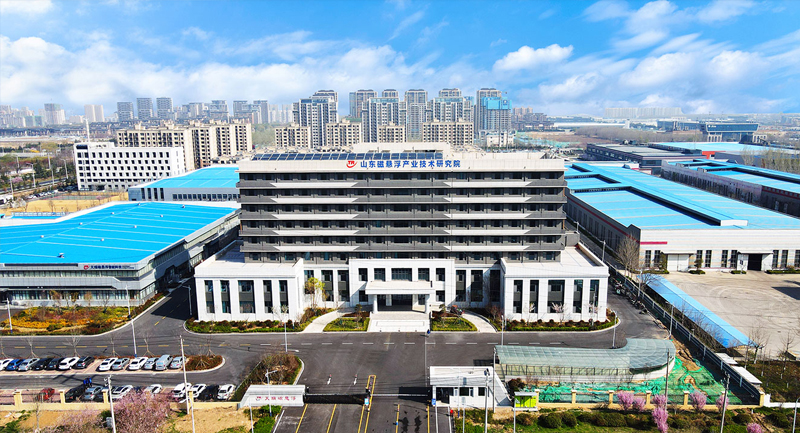


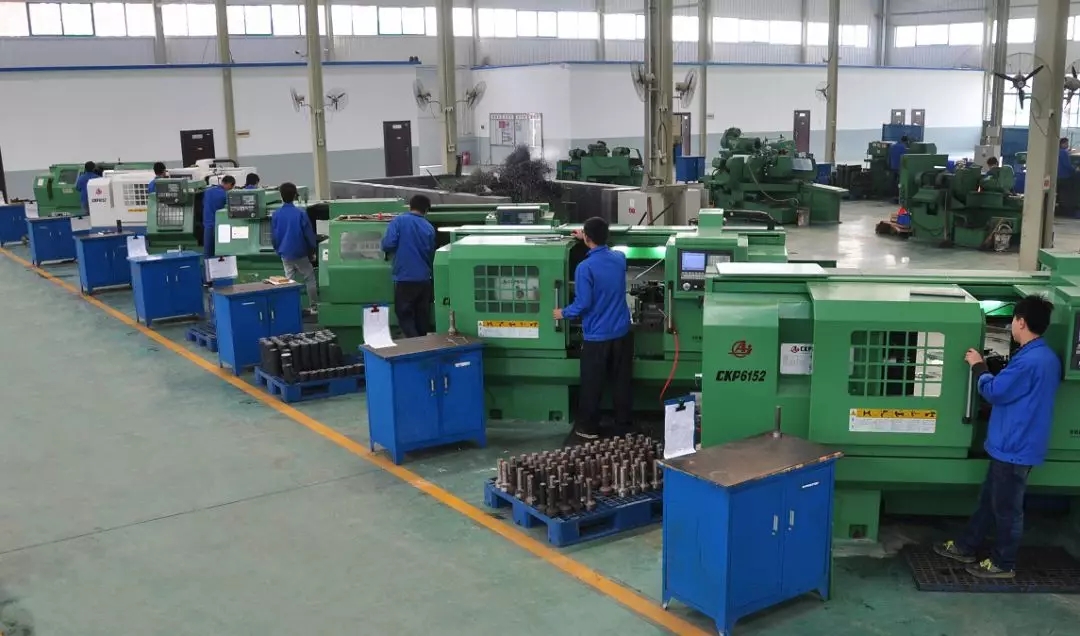
 Visit Tianrui heavy industry to investigate Shandong Tianrui Heavy Industry Co., Ltd
 重磅发布!天瑞重工获山东省专利一等奖,董事长李永胜外籍院士获山东优秀发明家奖
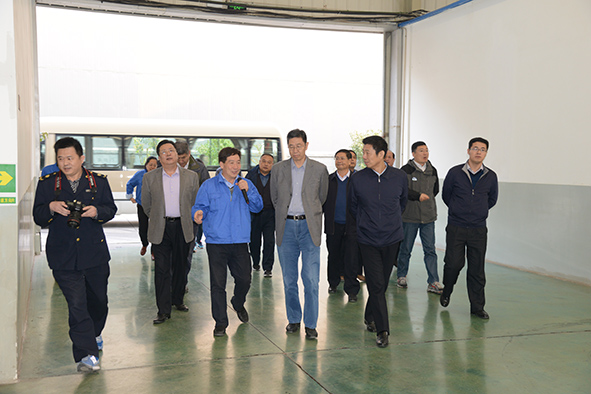 山东省质量强省及名牌战略推进工作领导小组莅临天瑞重工实地核查质量工作开展情况